School Bus Dashcam: What It Records and Why Schools Use It
Last checked: 5 October 2026. By the My School Ride team. My School Ride is a product of Satcop India Pvt. Ltd, so read with that in mind. We show where each fact comes from.
More schools now ask about cameras on their buses. Some want proof if there is an accident. Some want to know what happens inside the bus on a long route. Some parents simply feel safer when they know a camera is there. Before you buy, it helps to know what each kind of camera actually records, where the video goes, and who can see it.
This guide explains the basics in plain words. For the My School Ride camera options, see our school bus dashcam and cameras page.
Three kinds of camera on a school bus
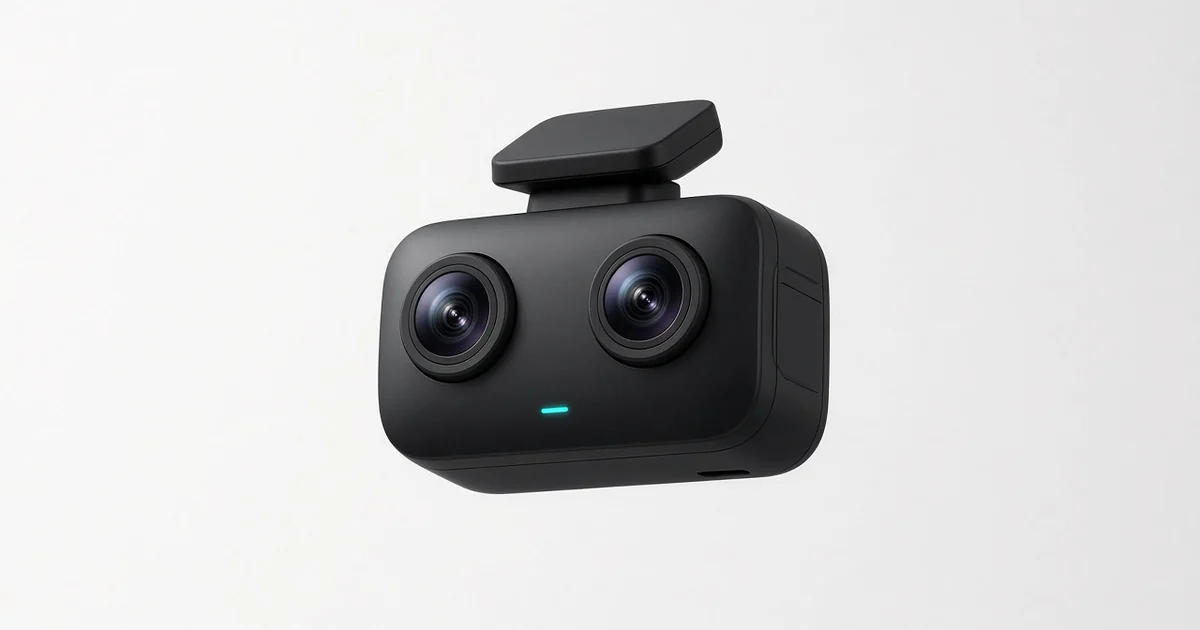
| Camera | Where it points | What it helps with |
|---|---|---|
| Dashcam | The road ahead, through the windscreen | What happened on the road: a near miss, a collision, how the bus was driven |
| Cabin (dome) camera | Inside the bus | What happened inside: seating, behaviour, who got on and off |
| Driver monitoring camera | The driver | Signs of tiredness or distraction, where the system supports it |
Many schools use a dashcam and at least one cabin camera together, because a dashcam alone does not show the inside of the bus.
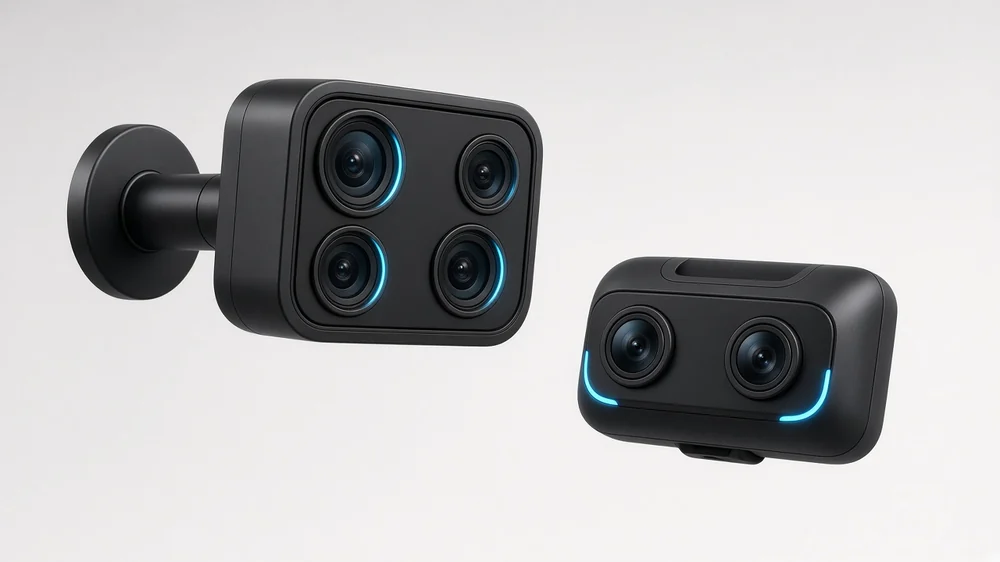
As described on the Satcop India website, My School Ride offers interior dome cameras with night vision, wide-angle dashcams, optional driver monitoring systems and two-way audio.
What a camera records
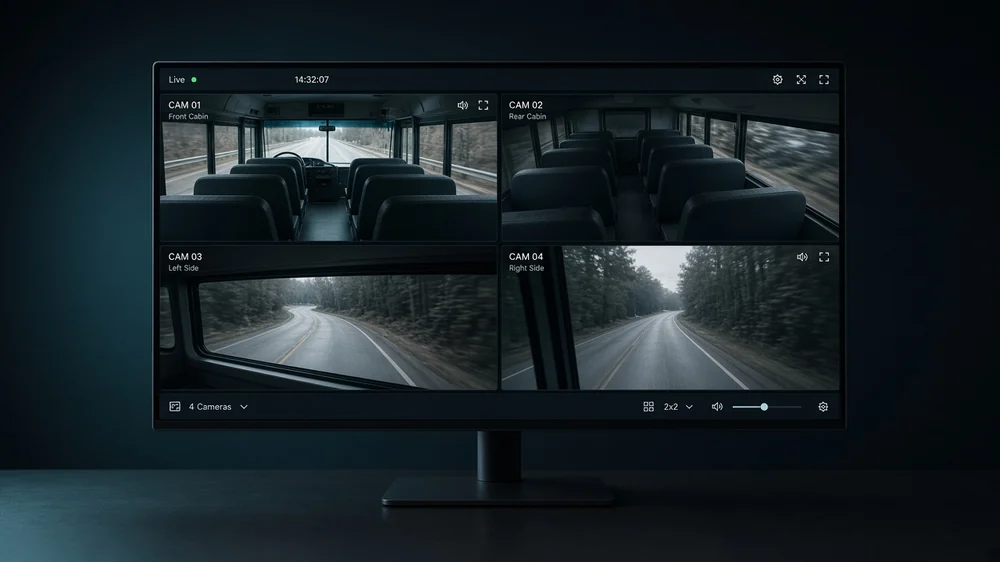
A camera records video, and some record sound. On its own, video only tells you what happened. It becomes far more useful when it is tied to the bus location and time. The Satcop India website describes video context tied to the vehicle's location, so a school can see where the bus was when something was recorded.
Some systems also mark events. The Satcop India website mentions automated alerts for speeding, unauthorised stops and route deviations, and marked footage for incidents.
Why schools use cameras
- Proof after an incident. If there is a complaint or an accident, video shows what happened, instead of one person's word against another's.
- A deterrent. Drivers and students tend to behave better when they know a camera is there.
- Comfort for parents. Some parents feel safer knowing the cabin is watched, especially for young children.
- Better driving. A road-facing camera, together with GPS speed data, helps a transport manager talk to drivers about how they drive.
A camera does not replace a trained attendant. It records; it does not look after children.
Where footage is kept
There are two main places: on a memory card or recorder in the bus, or in the cloud over a mobile connection. Some set-ups use both. The Satcop India website describes cloud and/or on-device recording, with footage retained for authorised access only.
How long footage is kept depends on the storage and the set-up you choose. We do not give a number of days here. Ask for a quote that states the storage plan for your buses.
Who can see the video
This is the question to ask first, not last. Decide who in the school may watch footage, who may download it, and how a request from a parent or the police is handled. Write it down. The Satcop India website says footage is retained for authorised access only, and describes an optional live feed for authorised staff and, where enabled, parents. The live feed, any fee and some alerts depend on the school package and are confirmed at a demo.
What the Gazette says about CCTV
Rules differ by state. As one example, the Maharashtra Gazette of 16 July 2026 says the Digital Safety Monitoring System is to include a closed-circuit television or video surveillance system (rule 10A). It also says a feed of the CCTV footage is to be made available to parents through a mobile app, and to RTO officials, the education department or the police when required. The Gazette has a rule on who keeps a backup of the footage; read rule 10A for the exact words.
The Gazette does not say whether a dashcam counts as CCTV, or how many cameras a bus needs. This is what the Gazette text says, not legal advice. Check with your RTO or local transport authority.
Questions to ask before you buy
- Which cameras are in the quote, and how many per bus?
- Does the cabin camera work at night?
- Where is footage kept, and how long, for the storage plan in the quote?
- Who can see footage, and how is access controlled?
- Can parents see a live feed, and is that included?
- Is the video tied to the GPS location and time?
- Who installs the cameras and the wiring?
- What does the written quote list: cameras, storage, data, installation, warranty and GST?
Where My School Ride fits
My School Ride pairs GPS tracking with optional cameras, so a school can start with tracking and add cameras later. Trusted by 200+ schools. Ask for a quote for your buses.
Frequently asked questions
How long is school bus camera footage stored?
It depends on the storage (in the bus, in the cloud or both) and the set-up you choose. We do not give a number of days. Ask for a quote that states the storage plan.
Is CCTV allowed inside a school bus?
As one example, the Maharashtra Gazette of 16 July 2026 says the Digital Safety Monitoring System is to include CCTV or video surveillance, with a feed to parents. Rules differ by state, so check with your RTO or local transport authority, and write down who may see the footage.
What is the difference between a dashcam and CCTV?
A dashcam faces the road and records driving. CCTV usually means cameras inside the bus, often with a live feed and stored recordings. The Maharashtra Gazette does not say whether a dashcam counts as CCTV. Many schools use both.
Can parents watch the camera?
With My School Ride, an optional live camera feed can be enabled for parents. It depends on the school package and is confirmed at a demo.
Does a camera replace a bus attendant?
No. A camera records what happens. A trained attendant looks after the children.
Book a demo
Tell us your city and how many buses you run. Book a demo · Ask for a quote · Chat with us on WhatsApp · Call +91 8600 002222
Sources
- satcop.com Smart Surveillance page: cameras, dashcams, night vision, alerts, cloud and/or on-device storage, authorised access. satcop.com/smart-surveillance-solution/ (fetched 4 Oct 2026)
- satcop.com school bus page (My School Ride): optional 4G cameras and dashcams; live feed, fee and some alerts depend on the school package. satcop.com/school-bus-tracking-solution/ (fetched 4 Oct 2026)
- Maharashtra Government Gazette, Extraordinary, Part IV-A, No. 309, 16 July 2026: rule 10A. Official PDF (read in full, 3 Oct 2026)